
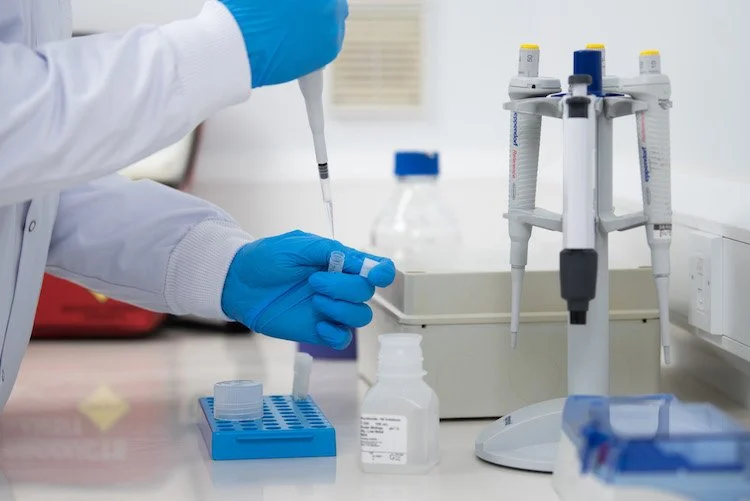
Donor lymphocyte infusions (DLIs) are a mainstay of post–allogeneic stem cell transplant care, and they’re being used earlier than ever, guided by early warning signs such as minimal residual disease (MRD) and changes in donor chimerism.
But while clinical practice has moved on, delivery hasn’t. DLIs are still often generated reactively, introducing delay and uncertainty at critical decision points.
This article explores the clinical role of DLIs and sets out the case for a different approach, standard at Biovault Technical, whereby DLIs are prepared and stored in advance, ready when they’re needed.
An improved standard in DLI readiness
Donor lymphocyte infusions (DLIs) remain a core component of post–allogeneic haematopoietic stem cell transplant (allo-HSCT) care. While newer modalities such as CAR-T therapies continue to evolve, DLIs are still widely used across transplant centres: established, effective, and increasingly applied earlier in the patient pathway.
Yet there is a disconnect. Clinical practice is moving towards earlier, pre-emptive use—guided by minimal residual disease (MRD) and chimerism monitoring—while operational models for DLI delivery remain largely reactive.
At Biovault Technical, we address that gap directly. DLIs are not treated as a contingency. They are prepared as standard, embedded within a regulated processing and storage pathway designed to support immediate clinical use.
what is a donor lymphocyte infusion (DLI)?
A donor lymphocyte infusion involves administering donor-derived lymphocytes—primarily T cells—following allo-HSCT.
Unlike the initial transplant, DLIs:
do not aim to re-establish engraftment
function as an immunological intervention
enhance the graft-versus-leukaemia (GVL) effect
Their activity is mediated through recognition of residual malignant cells and activation of cytotoxic and cytokine-driven immune responses.
This mechanism also underpins the principal risk associated with DLIs: graft-versus-host disease (GVHD). As a result, dosing is typically delivered in an escalating manner, balancing efficacy against toxicity within a highly patient-specific context.

Donor Lymphocyte Infusion (DLI) delivered as an outpatient intravenous infusion
Clinical indications and the shift towards earlier DLI use
DLIs are most commonly used in three settings:
Disease relapse
Still the most frequent indication, with particularly strong responses observed in conditions such as chronic myeloid leukaemia.
Mixed chimerism
Where declining donor chimerism suggests graft instability or relapse risk, DLIs can reinforce donor immune dominance.
Minimal residual disease (MRD)
Increasingly central to decision-making, enabling earlier, pre-emptive intervention before overt clinical relapse.
This shift reflects a broader direction in transplant medicine: intervening earlier, when disease burden is lower, and response rates are typically higher.
But earlier intervention only works if the therapy is available when needed.
the limitation of reactive DLI models
In many centres, DLIs are not prepared at the time of initial transplant. Instead, they are generated in response to a clinical trigger.
This typically involves:
re-contacting and re-consenting the original donor
arranging a second apheresis procedure
scheduling laboratory processing and release
While well established, this model introduces avoidable constraints into a time-sensitive pathway.
Time delays
Coordinating donor availability and collection can take weeks, by which point disease dynamics may be changing.
Donor dependency
Donors may be unavailable, unwell, or unable to undergo repeat collection. In some cases, DLIs may be delayed or not feasible.
Operational burden
Additional demand is placed on apheresis capacity, clinical teams and laboratory workflows, often at short notice.
Donor impact
Repeat procedures create additional logistical, physical and emotional burden for donors.
Taken together, this creates variability at precisely the point where clinical decision-making is most time-critical.
from contingency to capability: a pre-emptive approach
An alternative model is to prepare DLIs proactively, at the point of initial stem cell processing.

At Biovault Technical, this is standard practice.
During processing of the mobilised stem cell product:
a small aliquot is retained
processed into a DLI product
cryopreserved and stored for potential future use
This approach is integrated within a fully regulated processing and storage pathway, supported by JACIE-accredited systems, HTA licensing, and MHRA-compliant distribution frameworks—ensuring that any stored product remains patient-ready, traceable and clinically usable.
It converts DLI from a reactive intervention into a defined, pre-prepared therapeutic option.
why pre-prepared DLIs make a difference
Embedding DLI preparation into the initial transplant pathway provides clear advantages:
Immediate availability
DLIs are accessible without delay, with release and distribution often possible within 48 hours of clinical decision-making.
Reduced operational complexity
No requirement for repeat apheresis, donor coordination or additional scheduling.
Reduced donor burden
Avoids the need for a second donation, supporting a more donor-centric approach.
Risk mitigation
Removes dependency on donor availability, particularly relevant in unrelated or international donor settings.
System efficiency
Replaces unpredictable, time-sensitive processes with planned, controlled capability.
This represents a shift in mindset: from just-in-time manufacturing to risk-managed preparedness.
the infrastructure behind readiness

Pre-prepared DLIs only deliver value if the underlying systems are robust.
At Biovault Technical, this includes:
JACIE-aligned cellular therapy processing
HTA-licensed storage and governance
full chain-of-identity and chain-of-custody tracking
cryogenic storage with continuous monitoring and alarm systems
MHRA WDA(H)-compliant distribution to clinical sites
Biovault’s infrastructure is designed to maintain biological materials in a continuously controlled, monitored state, ensuring they remain viable, traceable and ready for clinical use at any point in the pathway.
DLIs in the context of modern cell therapy
DLIs continue to play a valuable role alongside more complex engineered therapies.
They are:
faster to deploy (when available)
less complex to manufacture
widely accessible across transplant programmes
While they are less targeted and carry GVHD risk, their responsiveness makes them particularly relevant in settings where speed and clinical timing are critical.
From stored cells to clinical action
As clinical practice shifts towards earlier intervention, the expectation of availability changes.
DLIs cannot remain a reactive, donor-dependent process if they are to support MRD-driven decision-making and time-sensitive care.
By integrating DLI preparation into the initial transplant pathway, Biovault Technical enables:
faster clinical response
reduced operational burden
improved donor experience
greater certainty in the patient pathway
Because when the decision is made, availability should not be the limiting factor.
get in touch to discuss DLI processing and storage
If you are reviewing your allo-HSCT pathways or exploring how to improve readiness for donor lymphocyte infusions, our team can support you.
Contact Biovault Technical to discuss processing, storage and distribution solutions tailored to your programme.